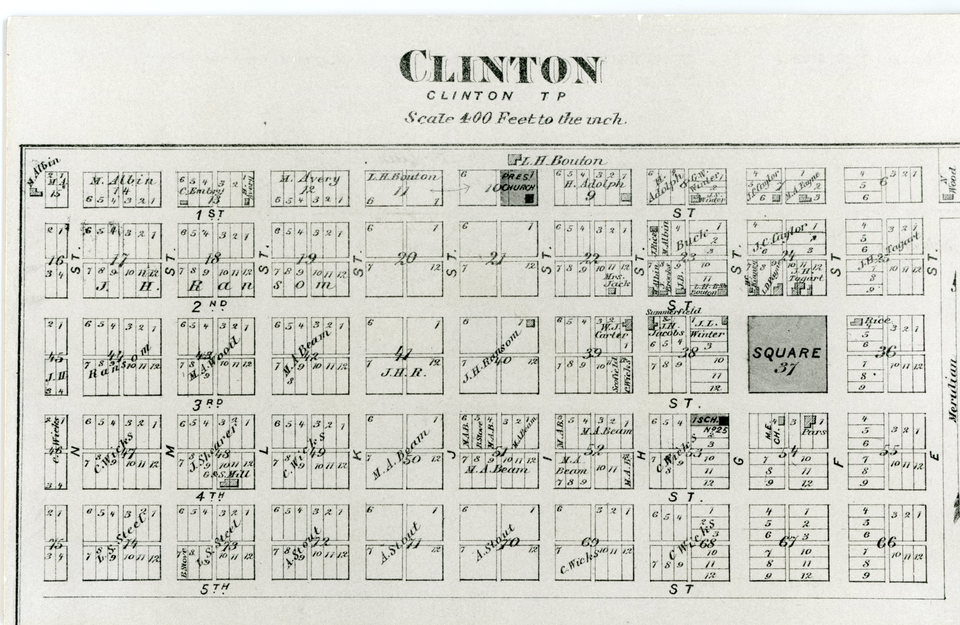
Clinton, Kansas
Forty settlers lived in the Clinton area by 1855, including abolitionists like the Burson and Jessee families. During the first territorial election in March 1855, proslavery supporters from Missouri flooded the Clinton polls, violently confiscated the ballots, and illegally voted for proslavery representatives. Despite this experience, town residents continued to support the antislavery movement. Clinton developed with the addition of two churches, a school, a mill, and several dry-goods stores. Clinton was not entirely drowned by Clinton Dam, but the construction of Clinton Lake in the 1970s severed the town from both local neighbors and the city of Lawrence, leading to economic starvation. Seasonal lake tourism continues to fuel the town’s only remaining business, the Clinton Store.
About this community
- Dam
- Clinton Dam
- River
- Wakarusa River
- Established
- 1854
- Inundated
- 1967
- Population
- 300
Archive artifacts
Photos
-
Clinton Methodist Church 1903Clinton Methodist Church and parishionersWakarusa River Valley Heritage Museum -
Scott Kirkham Store 1900Wakarusa River Valley Heritage Museum -
Old Clinton Store 1850Wakarusa River Valley Heritage Museum -
Welcome to Clinton sign newspaper clipping 1970Newspaper clipping showing “Welcome to Clinton” sign built by Clarence Anderson, a lifelong Clinton resident, ca. early 1970s.Will Hess · Wakarusa River Valley Heritage Museum -
What Is Left Of Anderson House 1972“What is left of house,” after the Corps of Engineers demolished the property. Photograph by Clarence Anderson, September 17, 1972.Clarence Anderson · Wakarusa River Valley Heritage Museum -
Anderson Home 1855Clarence Anderson’s childhood home, located where Rock Creek boat ramp is today. Photograph by Clarence Anderson.Clarence Anderson · Wakarusa River Valley Heritage Museum -
Early Store Front in Clinton 1850Early store front in Clinton, KansasWakarusa River Valley Heritage Museum -
Clinton School Students 1800Clinton School with students, ca.1800sWakarusa River Valley Heritage Museum -
Clinton baseball players 1900Clinton women baseball players.Wakarusa River Valley Heritage Museum -
Clinton School Students, 1910 1910An integrated class of Clinton students standing in front of the schoolhouse. While Jim Crow laws remained strong throughout the “free state” of Kansas, including the city of Lawrence and institutions such as the University of Kansas, the rural communities of Clinton (and nearby Bloomington) offered small pockets of brief refuge. This is not to say that racism did not exist in these communities, but the early abolitionist settlers left a lasting impact on the political and social direction of these towns.Wakarusa River Valley Heritage Museum
News
- "Clinton Dam Work Goes on Night and Day," Lawrence Journal-World 1974“Clinton Dam work goes on night and day,” Lawrence Journal-World, May 31, 1974.Kenneth Spencer Research Library, Kansas Collection
Sources
- Soil of Our Souls (Martha Parker and Betty Laird, 1976)
- “Decolonizing the Wakarusa Museum: The Role of Public Education and Forced Displacement Within the Settler Colonial Structure,” (Claire Cox, Undergraduate Thesis, Department of History, University of Kansas, 2023)
- “Building Tomorrow Today: Clinton Lake and the U.S. Army Corps of Engineers in the Central Great Plains, 1951-1982” (Claire Cox, Master’s Thesis, Department of History, University of Kansas, 2024)
- Clinton town plat map (Wakarusa River Valley Heritage Museum, 1979.24)
