Richland, Kansas
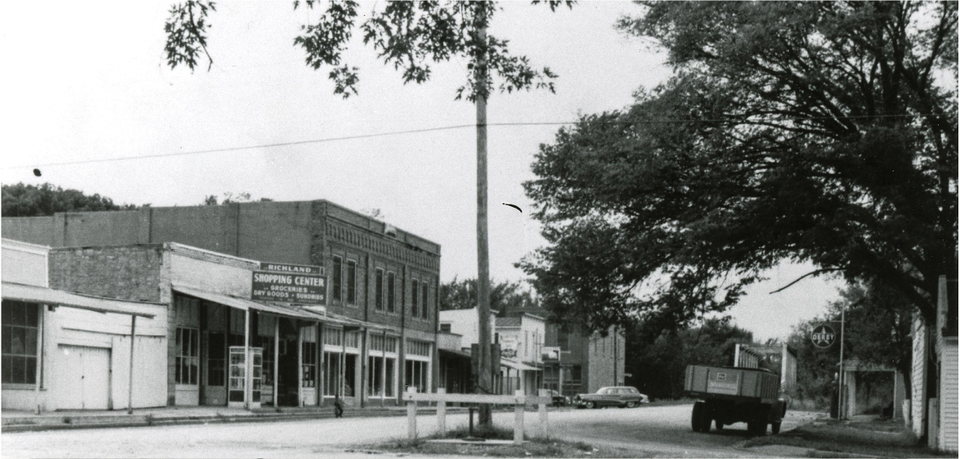
Richland, the largest community in the Wakarusa River Valley, became a railroad stop in the early 1870s. By the 1890s, Richland boasted a lumber yard, a railroad depot, two blacksmiths, two hardware stores, two general stores, two millinery shops, two hotels, livery stables, a drug store, a meat market, and an ice cream parlor. Additionally, the community established a one-room schoolhouse, a Methodist church, a United Brethren church, and several newspaper presses. The town experienced frequent flooding, and particularly destructive floods occurred in 1895 and 1904. Richland rebuilt critical infrastructure at higher elevations to avoid future damages, and residents learned how to live in harmony with the river. Although Richland did not fall within the direct path of Clinton Lake, it was included in the flood plain, and the town was scheduled for demolition. USACE negotiated with local landowners to buy their property and, in May 1967, the community gathered for a final church service.
About this community
- Dam
- Clinton Dam
- River
- Wakarusa River
- Established
- 1854
- Inundated
- 1967
- Population
- 300
Sources
- Soil of Our Souls (Martha Parker and Betty Laird, 1976)
- “Decolonizing the Wakarusa Museum: The Role of Public Education and Forced Displacement Within the Settler Colonial Structure,” (Claire Cox, Undergraduate Thesis, Department of History, University of Kansas, 2023)
- “Building Tomorrow Today: Clinton Lake and the U.S. Army Corps of Engineers in the Central Great Plains, 1951-1982” (Claire Cox, Master’s Thesis, Department of History, University of Kansas, 2024)