Bloomington, Kansas
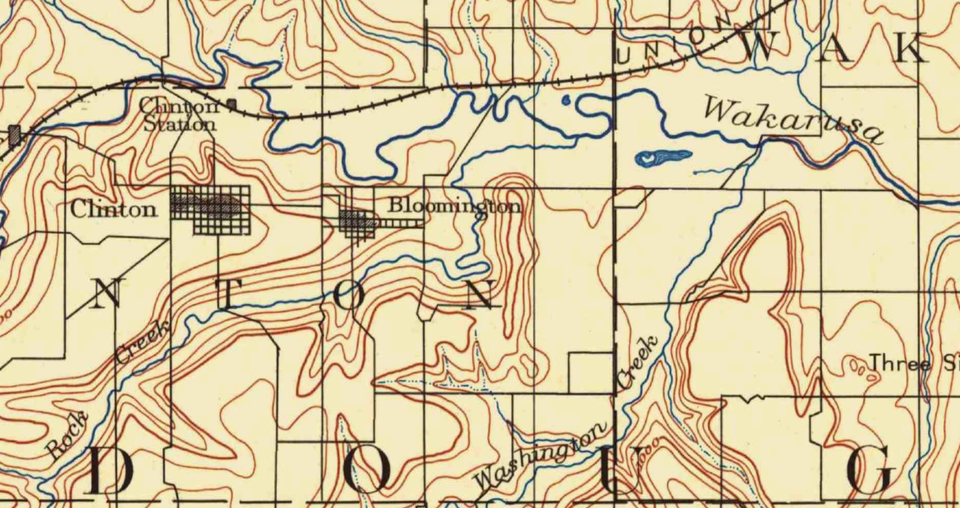
The town of Bloomington emerged in February 1857 on land that previously belonged to the Kaw Tribe. The residents of Bloomington were staunch abolitionists who supported the free state cause. Additionally, several settlers, such as Henry Hiatt and J.C. Steele, used their homes as stations along the Underground Railroad. Following the Emancipation Proclamation in January 1863, a mass exodus of formerly enslaved peoples, the majority from Missouri, North Carolina, and Virginia, started migrating to Kansas in search of equal opportunity and a chance to own land. Many Black families settled in Bloomington, purchasing land from Steele. By 1870, Black settlers had restored Bloomington with new life. Although Bloomington was declared officially vacated in 1876, the small, rural community did not die out entirely. The families of formerly enslaved peoples continued to live and farm in the region for the next 100 years.
About this community
- Dam
- Clinton Dam
- River
- Wakarusa River
- Established
- 1857
- Inundated
- 1970
- Population
- 100
Sources
- Martha Parker and Betty Laird, Soil of Our Souls (1976).
- Claire Cox, “Decolonizing the Wakarusa Museum: The Role of Public Education and Forced Displacement Within the Settler Colonial Structure," (2023).