Celilo Falls, Oregon
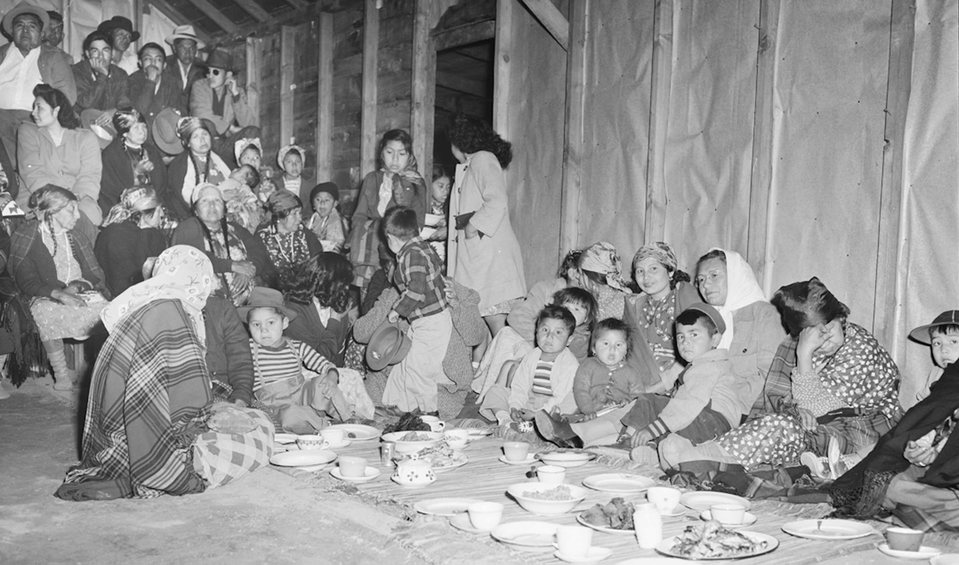
Feast of the First Salmon at Celilo Falls, 1948. Villages near Celilo Falls, or Wy-am, have existed for at least 11,000 years, and Celilo Village is the oldest continuously-inhabited community in Oregon. The culture of the area's historic villages mixed attributes from the Chinookan and Sahaptin-speaking peoples, and Celilo Falls was an important gathering and trading site for a network of Indigenous groups that stretched from Alaska to California to the Rocky Mountains. It also teemed with fish, and rights to catch the salmon, lamprey eel, and sturgeon at the Falls were passed down along kinship lines. In the nineteenth century, white settlers and the diseases they brought displaced many of the Indigenous people who lived around the Falls, and the rise of commercial fisheries, canneries and other forms of river development destroyed Native fishing sites. Still, traditional fishing practices continued until Dalles Dam inundated Celilo Falls in 1957. The site remains a culturally significant and sacred place for many of the area's Indigenous people, including present-day residents of Celilo Village.
About this community
- River
- Columbia River
- Region
- 274
- Established
- 9000 BCE or earlier
- Inundated
- 1957
The community that was displaced
- Displacement cost
- $20,439,343
- Property value
- $117,516
- Vocations
- farmer, fisherman, rancher
- Birthplaces
- local