Detroit Dedication
by Jack Warner, Graduate Research Assistant (2022-2024)
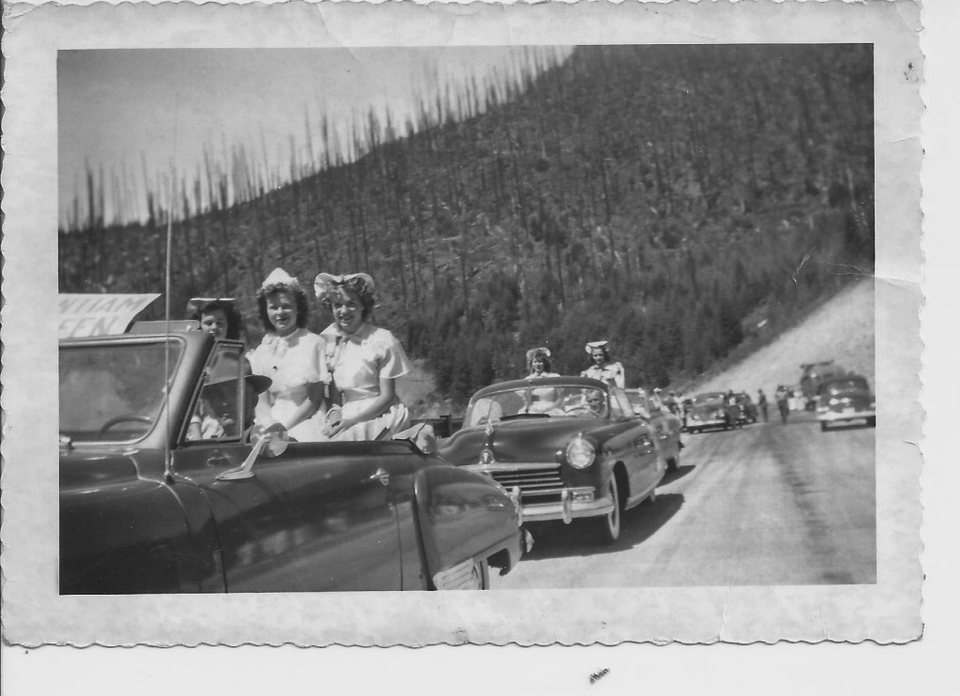
Upon completion of Detroit and Big Cliff Dams, the United States Army Corps of Engineers (USACE) held a celebration to commemorate the feat of engineering. The Detroit Dam alone, a concrete gravity dam that at the time was the fourth tallest at the world standing at 460 feet tall, represented a milestone in the wider Willamette Valley Project.[1] Roughly a month after the completion of the dams the Corps, in conjunction with the Forest Service and WVP committee, held a dedication ceremony at the base at the Detroit Dam. The organizers of the event planned on a crowd of thousands to see the activation of the world’s fourth largest dam.[2]
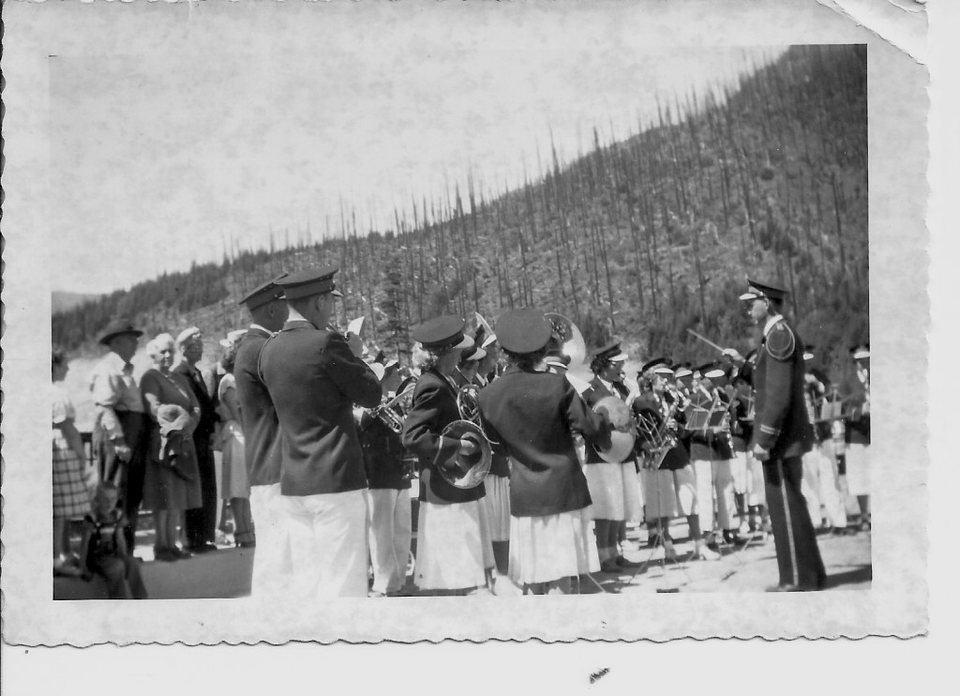
The programming of the event included a band, the firing of 70 mm cannons, a speech from the former Governor of the State of Oregon and First Chairmen of the WVP, Douglas McKay. The dedication concluded with a ceremonial dance performed by the Warm Springs Native American tribe.[3] Attendees were also invited to tour the dam to see its internal workings and see the hydroelectric technology that would power their homes.[4]
The dedication also sought to address one of the major issues that the dam would produce beyond of the inundation of the town of Detroit— the disruption of fish migration across the new barrier on the North Santiam River. To remedy this controversy and ease the protests of local wildlife advocates the dedication included information on the new Marion Forks Salmon Hatchery that was built six miles downstream from Big Cliff.[5]
While the dedication was supposed to be a day of jubilation, it was not so for everyone. The small town of Detroit, formerly located just upstream from the new dam, was bought out and demolished by USACE to make way for the dam and reservoir. Ovid Orr stands as a representative figure reflecting the sentiments of the Detroit community. They opposed the demolition of their homes and the enforced relocation imposed upon them. Orr, a deaf, nearly blind widower, pleaded for USACE to reconsider the location of the new dam and pleaded that the Corps build it upstream of his home.[6] These pleas fell on deaf ears as the momentum of the WVP failed to yield and consider the human cost of dam construction. While many chose to celebrate the creation of the new dam, it is critical to consider the wider impact of inundation and displacement of small communities like Old Detroit.
[1] “Oregon’s North Santiam Area Welcomes You” (Willamette River Basin Committee, 1953), North Santiam Historical Society.
[2] “Arrangements Committee for Dedication of Detroit Dam” (Meeting Minutes, April 6, 1953), North Santiam Historical Society.
[3] United States Army Corps of Engineers, “Welcome to the Detroit Dam Project by the US Army Corps of Engineers,” June 10, 1953, North Santiam Historical Society.
[4] “Oregon’s North Santiam Area Welcomes You.”
[5] United States Army Corps of Engineers, “Welcome to the Detroit Dam.”
[6] Ovid B. Orr, “Orr Correspondence with Army Corps of Engineers,” May 14, 1938, National Archives and Records Administration.