Construction of Detroit and Big Cliff Dams
by Jack Warner, Graduate Research Assistant (2022-2024)
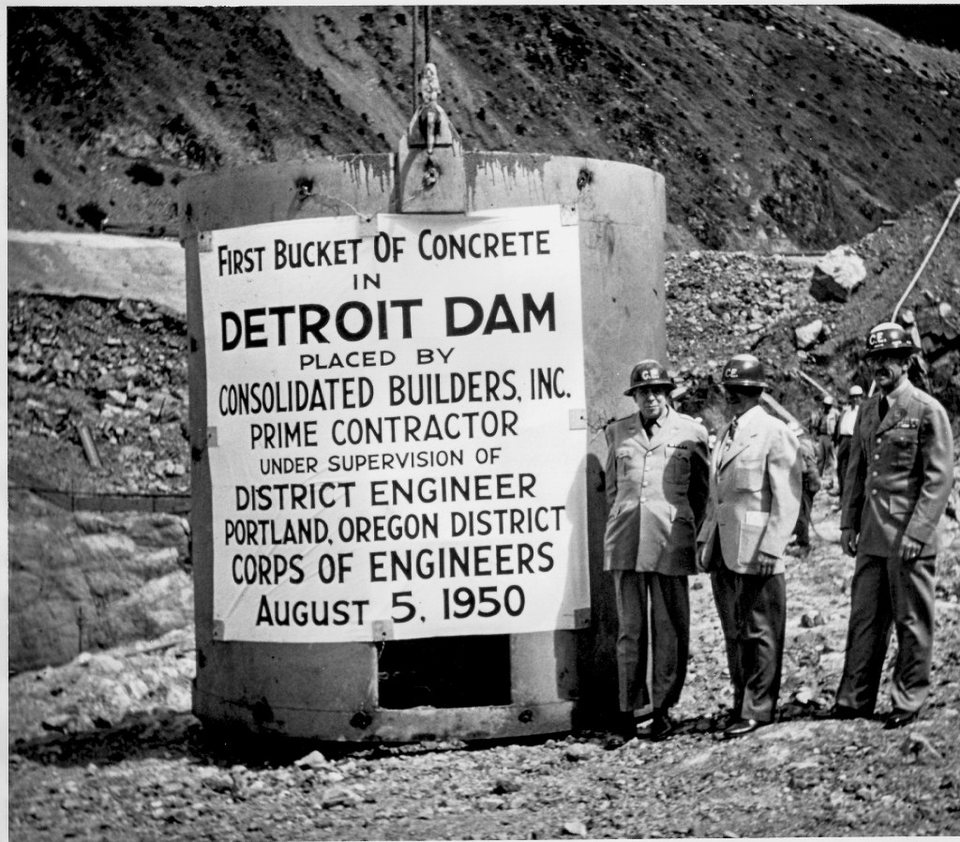
The West was an ever-changing landscape of ecological reconstruction in the twentieth century. During the dam building boom, the United States set out to construct a series of dams that would signal the marvels of engineering the country was capable of.
The Columbia River quickly emerged as a prime candidate for dam construction due to its history of flood damage and the need for agricultural stability, which sparked public demands for dam projects. The Great Depression and subsequent New Deal programs provided significant funding and motivation for infrastructure projects. These projects would reach small communities around the United States, including those in the Willamette Valley.
Once the rivers along the tributaries of the Columbia were approved to be dammed, the United States Army Corps of Engineers, equipped with the Rivers and Harbors Act of 1927, descended on the region to begin what would become known as the Willamette Valley (or Basin) Project. By the 1930s the plan was still in its preliminary stages with local magnates and business leaders lobbying for the project as it would bring funding and jobs to Oregon. WWII halted progress on the dams as the United States diverted its resources to the war effort.
After the war ended, USACE returned its attention to the WVP and its dams. The North Santiam River, a significant tributary to the Columbia, earned not just one, but two dams. The construction on the Detroit Dam began shortly after WWII, costing roughly sixty million dollars and requiring thousands of workers. Those contracted to build the dam faced dangerous working conditions in the dense forests of Oregon but achieved their task by 1953.
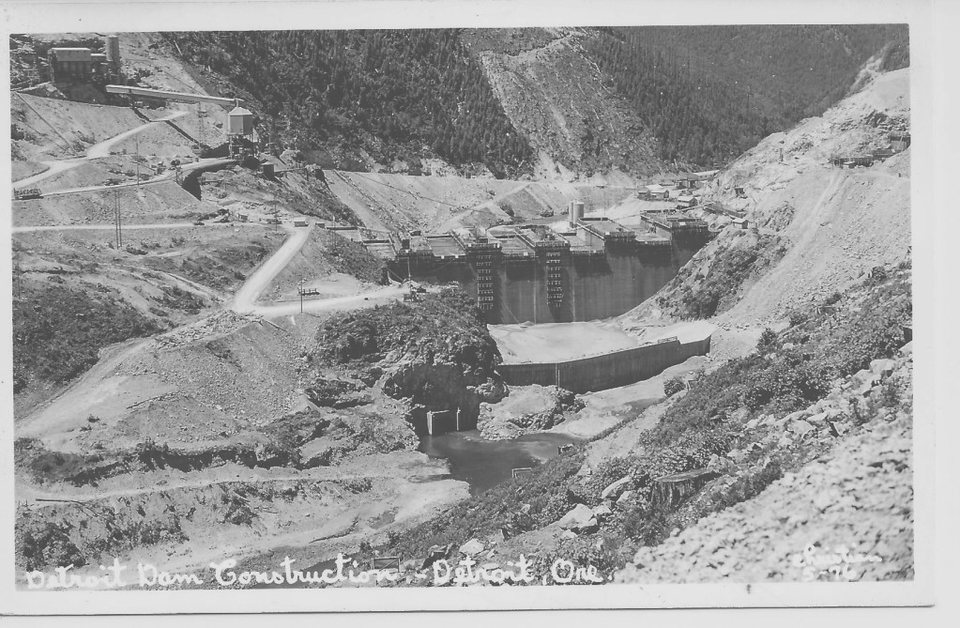
The subsidiary control dam, just six miles downstream from Detroit, was named Big Cliff. The secondary dam saw a much shorter development as its construction began in 1950 and concluded in the same year as its much larger counterpart.
While the Detroit and Big Cliff Dams brought progress and economic benefits to the region, they also prompted conversations about the balance between development and environmental preservation. Over time, efforts have been made to mitigate the dams' impacts, with recent injunctions requiring USACE to improve fish passage in these colossal concrete structures.
The construction of these dams incurred not only a financial cost, but one against the environment and local communities. The Detroit Dam led to the formation of the Detroit Lake or Reservoir, which flooded vast stretches of lush forests and displaced residents of the town of Old Detroit itself. The waters submerged homes, businesses, and natural habitats, forever altering the landscape.